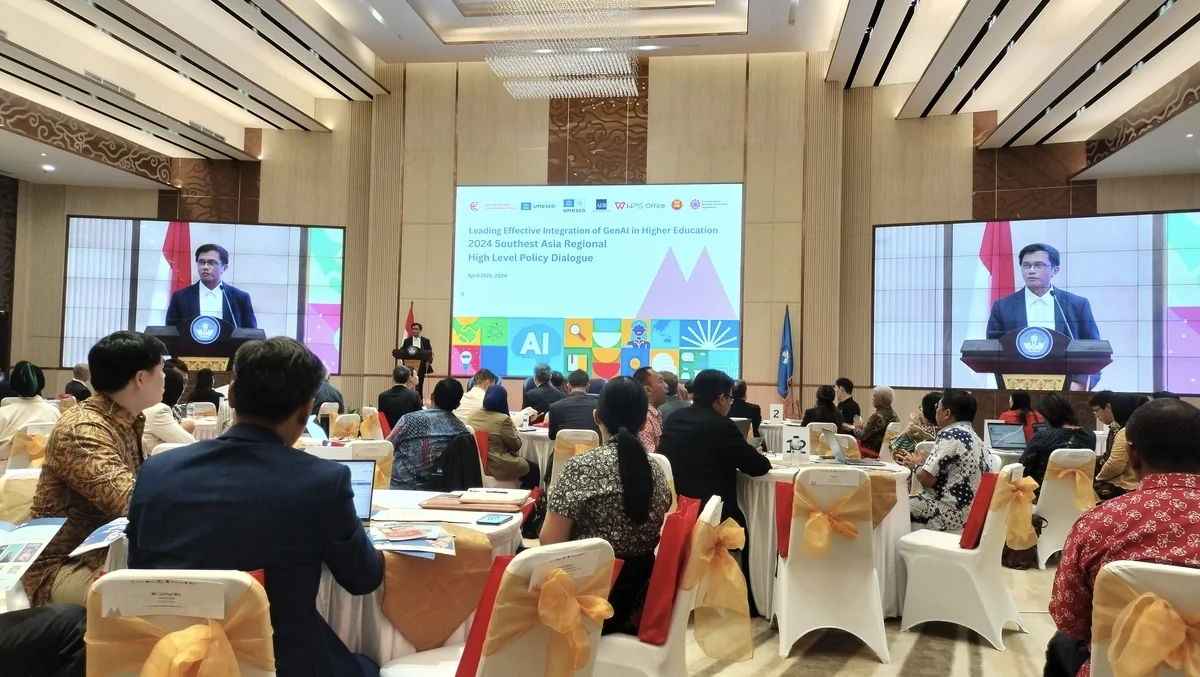
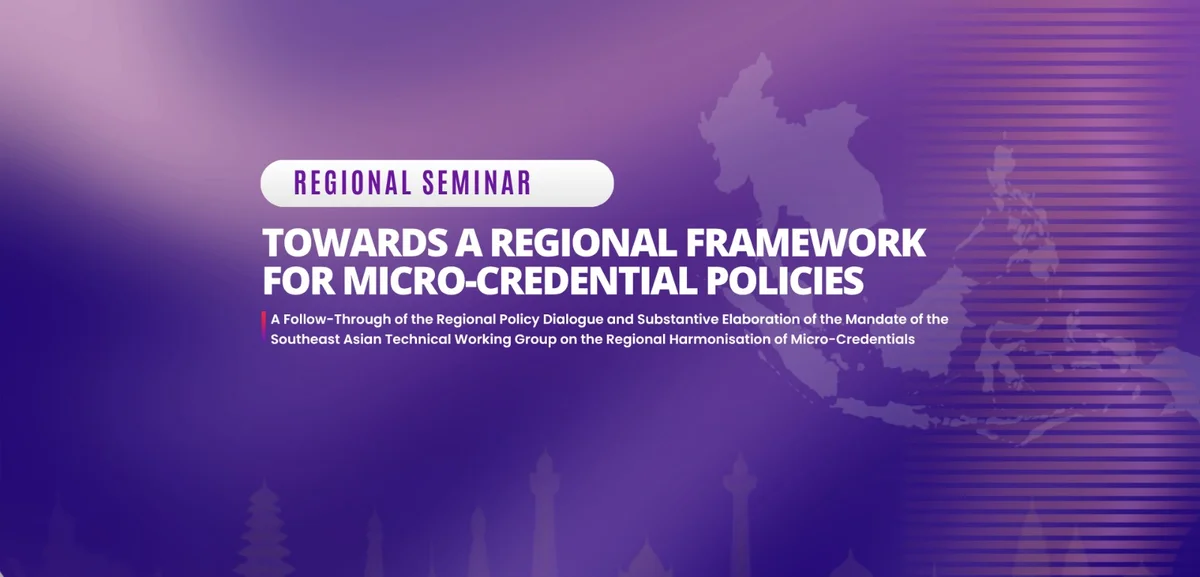
Jakarta, 3–4 November 2024 — ICE Institute successfully held a high-level discussion titled “Policy Development and Methods of Micro-Credentialing” at Artotel Jakarta. The event brought together influential figures from academia, industry, and government sectors to collaboratively design innovative and relevant micro-credential frameworks for Indonesia’s evolving education and workforce landscape.
The discussion was led by Dr. Wesley Teter, an international higher education expert from the University of Tokyo, while the opening remarks were delivered by Rahayu Dwi Riyanti, who emphasized the critical role of micro-credentials in addressing the growing skills gap in the digital era.
In her opening statement, Rahayu Dwi Riyanti highlighted the importance of flexible and competency-based learning pathways.
“Micro-credentials are a strategic solution to bridge the skills gap in the digital age. They enable learners to continuously upgrade their competencies in a more flexible, accessible, and industry-relevant way,” she stated.
Strengthening Workforce Access Through National Programs
One of the key speakers, Denni Puspa Purbasari, elaborated on how Indonesia’s Kartu Prakerja program has provided skills development opportunities for more than 18 million people nationwide.
She emphasized that micro-credentials play a vital role in helping job seekers gain relevant and industry-aligned competencies.
“With collaboration between government, academia, and industry, micro-credentials can serve as a strong bridge for Indonesia’s workforce to access quality employment opportunities,” she said.
Designing Future-Ready Micro-Credentials
Dr. Wesley Teter provided in-depth insights into the design principles of micro-credentials. He emphasized that micro-credentials must prioritize learner well-being and practical skill relevance.
“When designed to be portable and stackable, micro-credentials allow learners to acquire and combine skills according to their needs without undergoing lengthy formal education,” he explained.
His perspective highlighted the importance of flexibility and modular learning pathways in modern education systems, especially in response to rapidly changing industry demands.
Industry Perspective and Workforce Alignment
From the industry side, Heru Dewanto underlined the importance of aligning micro-credentials with emerging technological trends such as artificial intelligence and cybersecurity.
He stressed that industry involvement is essential in shaping relevant curricula that meet labor market needs.
“Collaboration between academia and industry ensures that micro-credentials are not only academically recognized but also carry real value in the workplace,” he stated.
Development of Strategic Micro-Credential Programs
ICE Institute has developed six core micro-credential programs covering key digital competencies, including Digital Business, Business Analytics, IT Governance, Artificial Intelligence, Data Engineering, and Cybersecurity.
Dr. Ir. Amelia Makmur explained that these programs are designed to provide practical, job-ready skills and will be officially launched in February 2025.
She also noted that the initiative is supported by a consortium of eight universities across Indonesia, ensuring academic quality and national standardization.
Policy Support and Lifelong Learning Commitment
Participants widely agreed that micro-credentials will play a crucial role in the future of education in Indonesia.
Prof. Drs. T. Basaruddin emphasized the importance of government support in developing standardized policy frameworks for micro-credentials that are nationally recognized.
Meanwhile, Prof. Dr. Paulina Pannen reaffirmed ICE Institute’s commitment to advancing flexible and inclusive lifelong learning systems.
“ICE Institute is committed to being at the forefront of lifelong learning innovation, making education more flexible, accessible, and relevant for all learners,” she stated.
Building a Sustainable Micro-Credential Ecosystem
The discussion concluded with a strong consensus on the importance of sustained collaboration between academia, government, and industry in building a robust micro-credential ecosystem in Indonesia.
ICE Institute continues to encourage multi-stakeholder partnerships to ensure that micro-credentials are aligned with industry needs and global standards.
With a clear policy framework and strong institutional collaboration, micro-credentials are expected to become a powerful solution in bridging the skills gap and enhancing the competitiveness of Indonesia’s workforce in the global labor market.
 policy dialogue
 Regional Seminar
 information
 Informasi
 Informasi
 information